HPE ProLiant ML350 Gen9 Tower Server: Tower vs Rack Guide
The HPE ProLiant ML350 Gen9 is a tower server, and that single fact makes it the right answer for a set of buyers who keep being sold rack servers they cannot use.
What is the HPE ProLiant ML350 Gen9?
A dual-socket tower server on socket LGA 2011-3, supporting Intel Xeon E5-2600 v3 and v4 processors, with DDR4 memory across 24 DIMM slots and iLO 4 remote management.
Internally it is the same generation as the DL380 Gen9. What differs is the chassis, and that changes where the machine can live.
Tower vs rack server: which do I need?
The decision this machine exists for, and it is decided by the room rather than the workload.
Rack servers cool with small fast fans because a 1U or 2U chassis has almost no internal height. Small fans running fast are considerably louder than large fans running slowly. A rack server in an office is a problem within a day, and no amount of getting used to it makes sustained exposure appropriate — our noise guide covers this honestly.
Tower servers have room for large slow fans, which makes them meaningfully quieter. They were designed to sit near people.
So the honest guidance: if you need one or two servers and have no machine room, a tower is the right answer rather than a workaround. Putting a rack server in a cupboard trades a noise problem for a heat problem and gives you both.
Choose rack instead where you have a proper room, where you need density, or where the estate is already racked.
Can an ML350 Gen9 be rack mounted?
Many ML-series towers are convertible, meaning they can be fitted into a rack lying on their side with the appropriate conversion kit.
Three things worth knowing.
The conversion kit is a separate part, and it is frequently not included with a used machine.
It consumes several rack units — considerably more than a DL380 would for similar capability. If rack space is scarce, a rack server is the better fit.
Rack-mounted noise is the same, but the room usually is not. A tower in a proper machine room is quieter than it needed to be, which is fine.
The useful position: buy a tower because the machine will live near people, not because it might be racked later. Our form factors guide covers the wider trade-off.
How many drives does an ML350 Gen9 hold?
A genuine advantage of the tower form factor: space is not the constraint it is in 1U or 2U.
Tower chassis of this class support high drive counts in small form factor configurations, and large form factor options exist for capacity work.
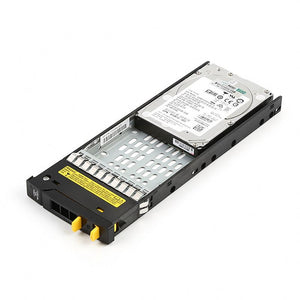
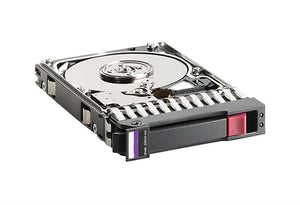
The same rules apply as anywhere. Bay count is fixed by the backplane fitted and cannot be increased by adding drives. Empty bays need Smart Carriers matched to your chassis generation, and this is the most common omission in a storage order — our backplanes guide covers both.
The tower also takes full-height expansion cards, which a 1U machine cannot — relevant if you need a card that does not come in low profile.
ML350 Gen9 processor and memory support
Intel Xeon E5-2600 v3 and v4 on LGA 2011-3, with the firmware caveat common to this generation: v4 requires firmware support the unit may not have, and a v4 processor fits a v3 board and will not post without it. Update before installing rather than after — our E5 v4 guide covers this.
Memory is 24 DIMM slots of DDR4 registered ECC, twelve per processor. Single-processor machines populate twelve only, channels must be filled evenly, and speed can drop as slots fill — our memory guide covers the rules.
One tower advantage worth noting: cooling is easier, so high-power processors are less constrained than they are in a 1U chassis.
Where does a tower server actually fit?
Four situations, and they are more common than the rack-first industry assumes.
Small businesses with no machine room. One or two servers in an office, a back room or a small comms cupboard.
Branch and remote sites, where there is no rack and nobody to attend the equipment. Note that ventilation still matters — our branch guide covers why heat is the main cause of branch equipment failure.
Workshops, clinics, studios and retail back offices, where the machine shares space with people.
First servers, where an organisation is moving off a desktop machine and does not want to invest in a rack, PDU and the rest of the surrounding infrastructure — our first server guide covers what else that decision involves.
Where a tower is wrong: any deployment needing density, and any environment that is genuinely dirty or hot, where a sealed enclosure is the answer instead.
What should I check on a used ML350 Gen9?
Drive carriers for empty bays, generation-matched. The Smart Array cache module and capacitor pack — without working cache backup the controller runs write-through and write performance collapses with no error reported, which is the first thing to check on any ProLiant that feels slow. Our Smart Array guide covers it.
Also: the rack conversion kit if you intend to rack it, the iLO licence if you need remote console, and power supply condition, since supplies are the second most common failure after drives.
And check where it will physically sit. A tower needs floor space and clearance for airflow, and putting one under a desk against a wall recreates the heat problem you avoided by not buying a rack server.
Frequently asked questions
Should I buy a tower server or a rack server?
The room decides it. If you need one or two servers and have no machine room, a tower is the right answer rather than a workaround — rack servers cool with small fast fans and are far too loud for a room where people work. Choose rack where you have a proper room or need density.
Can an ML350 Gen9 be mounted in a rack?
Many ML-series towers are convertible with the appropriate kit, which is a separate part frequently not included with used machines. It consumes several rack units — considerably more than a DL380 for similar capability — so if rack space is scarce, buy a rack server instead.
Is a tower server quieter than a rack server?
Meaningfully, yes. A tower has room for large slow fans where a 1U or 2U chassis must use small fast ones, and small fans running fast are considerably louder. Towers were designed to sit near people; rack servers were not.
Does an ML350 Gen9 take full-height expansion cards?
Yes, which a 1U machine cannot. That matters if you need a card that is not available in low profile, and it is a genuine advantage of the tower form factor alongside the higher drive capacity.
Can I put a tower server under a desk?
It needs floor space and clearance for airflow. Pushing one under a desk against a wall recreates the heat problem you avoided by not buying a rack server — ventilation still matters even though the noise does not.
Why is my ML350 slow with no errors showing?
Check the Smart Array cache capacitor pack. Without working cache backup the controller runs write-through and write performance collapses, with no failed drive and no array warning to point at it.
Tell us where the machine will physically sit and whether people work in that room, and we will say honestly whether a tower or a rack server is right.